
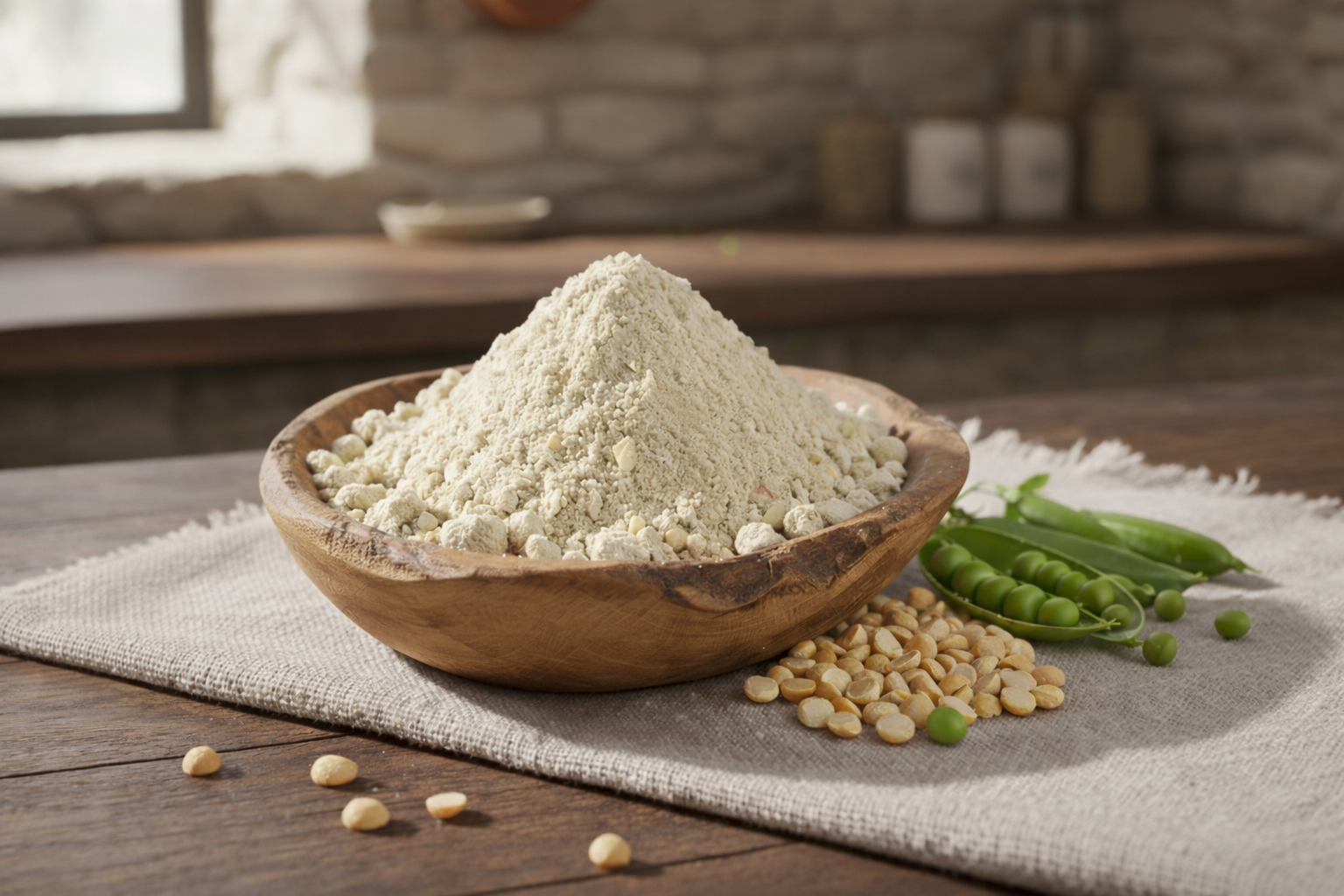
Pea protein (pisum sativum) is a clean, plant-based protein built for strength, satiety, and everyday performance.
Pea protein is a concentrated protein made from yellow field peas (Pisum sativum). It is popular because it delivers a high dose of protein without dairy and works well in smoothies and functional foods. At Helix, we use pea protein as a clean foundation for high-protein, low-sugar fuel that supports strength, recovery, and satiety.
Why We Use Pea Protein
Pea protein earned its spot on the Helix menu because we kept running into the same problem with “high-protein” options in the real world. We wanted a protein that was simple, natural, healthy and dependable. Dairy-based proteins were healthy, but with the obvious shortcoming for those who are lactose intolerant. Some plant proteins tasted aggressive or felt gritty.
Pea protein fits the bill because if we use the highest quality pea protein, it tastes great, it’s healthy, natural and has a mild profile that we can shape into multiple food uses. At Helix, we treat pea protein like infrastructure. It is not a gimmick and it is not a label flex. It is a tool that helps us deliver what we actually care about: functional nutrition that fits modern life. Consistent protein, balanced formulas, and a smooth experience that makes you want to come back tomorrow.
The Helix Menu Integration: Want to experience pea protein the way it is meant to feel: creamy, balanced, and built like real food? Find it at Helix in:
- High-protein meal replacement shakes
Historical & Cultural Heritage
Peas have been part of human diets for thousands of years and are one of the world’s foundational “staple” foods. Across many cultures, pulses like peas, lentils, chickpeas, and beans became essential because they were shelf-stable, nutrient-dense, and reliable across seasons.
Modern pea protein is a new format of an old idea. It takes a familiar whole food and refines it into a convenient, measurable ingredient that can support modern nutrition goals like higher daily protein intake.
Modern Production & Processing
Pea protein typically begins as dried yellow peas that are cleaned, milled, and separated into protein-rich fractions. The two most common production approaches are:
Wet Processing (often used for isolates): This method separates protein from starch and fiber using water-based separation steps, then dries the protein into a powder. Isolates usually have a higher protein percentage and are designed for smoother texture and consistency.
Dry Processing (often used for concentrates): This method uses mechanical separation techniques to concentrate protein without as many liquid steps. Concentrates can retain more of the pea’s original components and can behave a bit differently in taste and texture depending on the formulation.
The Helix Approach: We chose pea protein based on results in the cup. That means reliable mixing, smooth texture, and a protein base that supports the flavor experience instead of fighting it.
Primary Physiological Benefit: Muscle Support
STRENGTH AND RECOVERY: Pea protein is best known for supporting muscle-building and recovery goals when paired with resistance training and adequate total daily protein. It provides a strong protein dose in a dairy-free format, which makes it useful for people who want higher protein intake without whey.
The Helix Translation: If you want a reliable protein base that supports strength and recovery without dairy, pea protein is one of the most practical options.
Secondary & Niche Benefits
SATIETY & APPETITE SUPPORT: Protein is one of the most effective macronutrients for satiety. Pea protein can be especially helpful for people using shakes as true meal replacements because it supports fullness and helps the drink “hold” as a real meal when paired with fiber and fat.
A USEFUL SWAP FOR MORE PLANT-FORWARD EATING: A big advantage of pea protein is that it makes it easier to shift toward plant-forward eating without sacrificing protein goals. For many people, the real benefit is consistency. It gives you a simple way to hit protein targets day after day.
Bioavailability & Synergy Factors
Pea protein can be highly effective, especially when you account for a few nutrition fundamentals:
- Amino acid balance: Pea protein contains all essential amino acids, but like many plant proteins, its amino acid distribution is not identical to whey. A varied diet across the day helps cover the full spectrum.
- Training timing: If you are using protein to support training, what matters most is total daily protein and consistency, not perfection in a single serving.
- Better mouthfeel through synergy: Pea protein becomes dramatically more enjoyable when combined with:
- a creamy fat (nut butter, avocado, coconut)
- a fiber source (chia, flax, berries)
- aromatic flavor builders (cacao, cinnamon, vanilla, coffee)
The Helix Factor: This is part of why Helix formulations feel like food, not like “protein water.”
Helix vs. Standard Commercial Pea Protein
The difference is not just the ingredient. It is how the ingredient is built into the total experience.
Standard commercial pea protein often comes with common problems:
- A “beany” aftertaste
- Chalky mouthfeel
- Gritty settling
- Digestive discomfort when used in heavy doses or poorly balanced formulas
What we optimize for at Helix:
- Smooth texture and stable mixing
- Flavor pairing that rounds and softens pea’s earthiness
- Balanced formulation so the protein functions like real food (protein plus fiber plus fat plus micronutrients where appropriate)
Sourcing, Ethics & Sustainability
Peas are widely considered a resource-efficient protein crop compared to many animal-based protein systems. They also fit well into crop rotation strategies, which can support soil health and more resilient farming systems.
The Helix Commitment: We prioritize suppliers who can document quality and safety standards, including traceability, allergen controls, and purity testing.
The Helix Experience
Pea protein made our menu for one reason: people need protein they can actually use consistently.
Many “quick protein” options come with tradeoffs. Dairy sensitivity, excess sugar, unnecessary additives, or textures that make it feel like a chore. Pea protein gave us a base we could build on. It is high-protein, neutral enough to flavor well, and aligned with the Helix standard of functional nutrition without the junk.
At Helix, pea protein is not a “vegan alternative.” It is a performance ingredient that fits real life. Busy mornings, post-workout recovery, and the days when you need your food to do its job.
Functional Application
How to use pea protein at home (and make it taste good):
- Blend, don’t shake. A blender reduces clumps and grit.
- Use flavor rounders. Cacao, cinnamon, vanilla, coffee, and berries mask earthiness.
- Add a fat for creaminess. Nut butter or coconut improves texture fast.
- Choose a temperature lane. Pea protein often tastes best in cold smoothies or fully heated recipes, not lukewarm mixes.
- Start small if you are sensitive. Begin with half a scoop and scale up.
Pea Protein FAQs
Is pea protein a complete protein?
Pea protein contains all nine essential amino acids. Many people do well with it as a main protein source, especially when their overall diet includes a variety of protein foods across the day.
Is pea protein easier to digest than whey?
For many people, yes, particularly if they are sensitive to dairy. Individual tolerance varies.
Can pea protein help build muscle?
It can support strength and muscle goals when paired with resistance training and sufficient total daily protein intake.
Is pea protein safe if I have a peanut allergy?
Pea is a legume. Some people with legume allergies may react to pea protein. If you have a known allergy or severe sensitivity, consult your clinician and use caution.
Does pea protein cause bloating?
Some people experience bloating depending on serving size, formulation, and personal sensitivity. Starting with smaller servings can help.
Is pea protein gluten-free?
Pea protein is naturally gluten-free, but cross-contamination can occur. Look for allergen and facility statements if you have celiac disease or high sensitivity.
Is pea protein good for weight loss?
It can help as part of a structured plan because higher protein intake supports satiety and can make calorie control easier. It works best when used consistently, not as a quick fix.
Summary
- Common name: Pea Protein
- Botanical name: Pisum sativum
- Plant type: Legume (pulse)
- Primary form used in functional nutrition: Pea protein isolate or pea protein concentrate
- Primary nutrition role: High-protein ingredient that supports satiety and muscle maintenance
- Primary functional benefit: Muscle support when paired with resistance training and adequate total daily protein
- Key amino acid note: Contains all essential amino acids; leucine content is typically lower than whey, so total protein intake and diet variety matter
- Texture and formulation note: Mixes best when blended and paired with fat and flavor rounders (cacao, vanilla, cinnamon, berries)
- Common use cases: Smoothies, meal replacement shakes, protein-forward bowls, functional snacks
- Helix application: Used as a clean, dairy-free protein base in high-protein, low-sugar menu items
Comprehensive Pea Protein Glossary
- Amino Acids: Building blocks of protein. Your body uses amino acids to build and repair muscle, produce enzymes, and support many core functions.
- Complete Protein: A protein source that contains all nine essential amino acids. Pea protein contains all essential amino acids, although the relative amounts differ compared with whey and some other proteins.
- Digestibility: A measure of how efficiently the body can break down and absorb protein. Digestibility varies by person and can be influenced by processing and formulation.
- Hydrolysate: Protein that has been partially broken into smaller peptides. Hydrolyzed proteins may digest more quickly and can impact satiety differently than intact protein.
- Isolate: A more refined protein ingredient that typically contains a higher percentage of protein by weight, often with lower carbohydrate content than concentrates.
- Legume: A plant family that includes peas, beans, lentils, chickpeas, and peanuts. Legumes are known for protein and fiber content.
- Leucine: An essential amino acid associated with triggering muscle protein synthesis. Whey tends to be higher in leucine; pea protein can still support muscle goals when overall protein intake is sufficient.
- Meal Replacement: A formula designed to function as a meal by providing protein plus additional components such as fiber, fat, and micronutrients to support satiety.
- Mouthfeel: The texture experience of a food or drink. Protein powders can vary from creamy to chalky depending on particle size, processing, and recipe design.
- Peptides: Short chains of amino acids. Peptides can form when protein is hydrolyzed and may be absorbed differently than intact proteins.
- Pulse: A term for dried edible seeds of legumes, including peas, lentils, and chickpeas.
- Protein Concentrate: A protein ingredient that contains a moderate percentage of protein, often retaining more of the original carbohydrate and fiber fractions than isolates.
- Protein Isolate: A protein ingredient that typically contains a higher percentage of protein and is often used for smoother mixing and higher protein density per serving.
- Satiety: The feeling of fullness and satisfaction after eating. Protein is generally supportive of satiety, especially when paired with fiber and fat.
- Wet Fractionation: A common processing method for producing isolates that separates protein using water-based steps and pH-based separation.
- Dry Fractionation: A mechanical separation method that concentrates protein without the same wet chemistry steps, often using air classification.
Sources
Key Studies
- Pea protein supplementation promotes muscle thickness gains during resistance training: A double-blind, randomized, placebo-controlled trial vs whey protein. (2015).
PubMed: https://pubmed.ncbi.nlm.nih.gov/25628520/
Full text: https://pmc.ncbi.nlm.nih.gov/articles/PMC4307635/ - Efficacy of pea protein supplementation combined with resistance training on muscle performance in sedentary adults: A randomized, comparator-controlled clinical trial. (2024).
PubMed: https://pubmed.ncbi.nlm.nih.gov/38999765/
Journal: https://www.mdpi.com/2072-6643/16/13/2017 - Effects of whey and pea protein supplementation on markers of muscle damage, inflammation, and performance after eccentric exercise. (2020).
Full text: https://pmc.ncbi.nlm.nih.gov/articles/PMC7468723/ - Effect of plant protein on blood lipids: A systematic review and meta-analysis of randomized controlled trials. (2017).
PubMed: https://pubmed.ncbi.nlm.nih.gov/29263032/ Journal: https://www.ahajournals.org/doi/10.1161/JAHA.117.006659
Additional Sources
- Protein composition and nutritional aspects of pea protein fractions obtained by modified isoelectric precipitation using fermentation. (2023).
Full text: https://pmc.ncbi.nlm.nih.gov/articles/PMC10652897/ - Structure-function guided extraction and scale-up of pea protein isolates. (2022).
Journal: https://www.mdpi.com/2304-8158/11/23/3773 - Molecular evidence for two domestication events in pea (Pisum sativum). (2018).
Full text: https://pmc.ncbi.nlm.nih.gov/articles/PMC6265838/ - Unraveling origin, history, genetics, and strategies for improvement of pea. (2022).
Full text: https://www.frontiersin.org/articles/10.3389/fgene.2022.932430/full - Checking Agriculture’s Pulse: Field pea (Pisum sativum L.). (2019).
Full text: https://pmc.ncbi.nlm.nih.gov/articles/PMC6873872/ - Towards sustainable consumption of legumes: How origin and processing influence environmental impacts. (2021).
Article: https://www.sciencedirect.com/science/article/pii/S2352550921000178 - FDA GRAS Notice Inventory (GRN 788): Pea protein concentrate. Listing: https://hfpappexternal.fda.gov/scripts/fdcc/index.cfm?id=788&set=GRASNotices
GRAS notice PDF: https://www.fda.gov/media/117922/download FDA response letter PDF: https://www.fda.gov/media/117924/download - USDA FoodData Central (nutrition reference database): https://fdc.nal.usda.gov/
- MyFoodData (example baseline macro entry used for estimates): https://tools.myfooddata.com/nutrition-facts/1831744/wt1
DISCLAIMER: This page is for informational and educational purposes only and is not intended as medical advice. Helix Health Foods products are not intended to diagnose, treat, cure, or prevent any disease. Always consult a qualified healthcare professional before making changes to your diet, especially if you are pregnant, nursing, have a medical condition, or take medications.